

Science
Is Cold Plunging Healthy? What the Science Really Says About Cold Water
Yes, cold plunging is safe for most healthy people and offers documented benefits for recovery, sleep, stress, mood, and immune function. The effects build over weeks of consistent practice, not from a single session.

Joana Rusch
Lead Content & Recovery Research
Is cold plunging actually good for you, or just uncomfortable? Let's look closely: which benefits are genuinely backed by science, how cold and how long should you bathe, and who is cold plunging less suitable for? This guide gives you the honest, evidence-based overview. Whether you call it an ice bath, cold plunge, or cold water immersion, the meaning is the same: deliberate immersion in cold water.
Quick Answer
Cold plunging is safe for most healthy people and offers documented benefits: regular immersion in cold water can improve post-exercise recovery, deepen sleep, reduce stress, and support immune function. The effects build over weeks of consistent practice, not from a single session, and moderate doses work best: 10 to 15 degrees for 2 to 5 minutes. With cardiovascular conditions or during pregnancy, get medical clearance first.
What Exactly Is Cold Plunging?
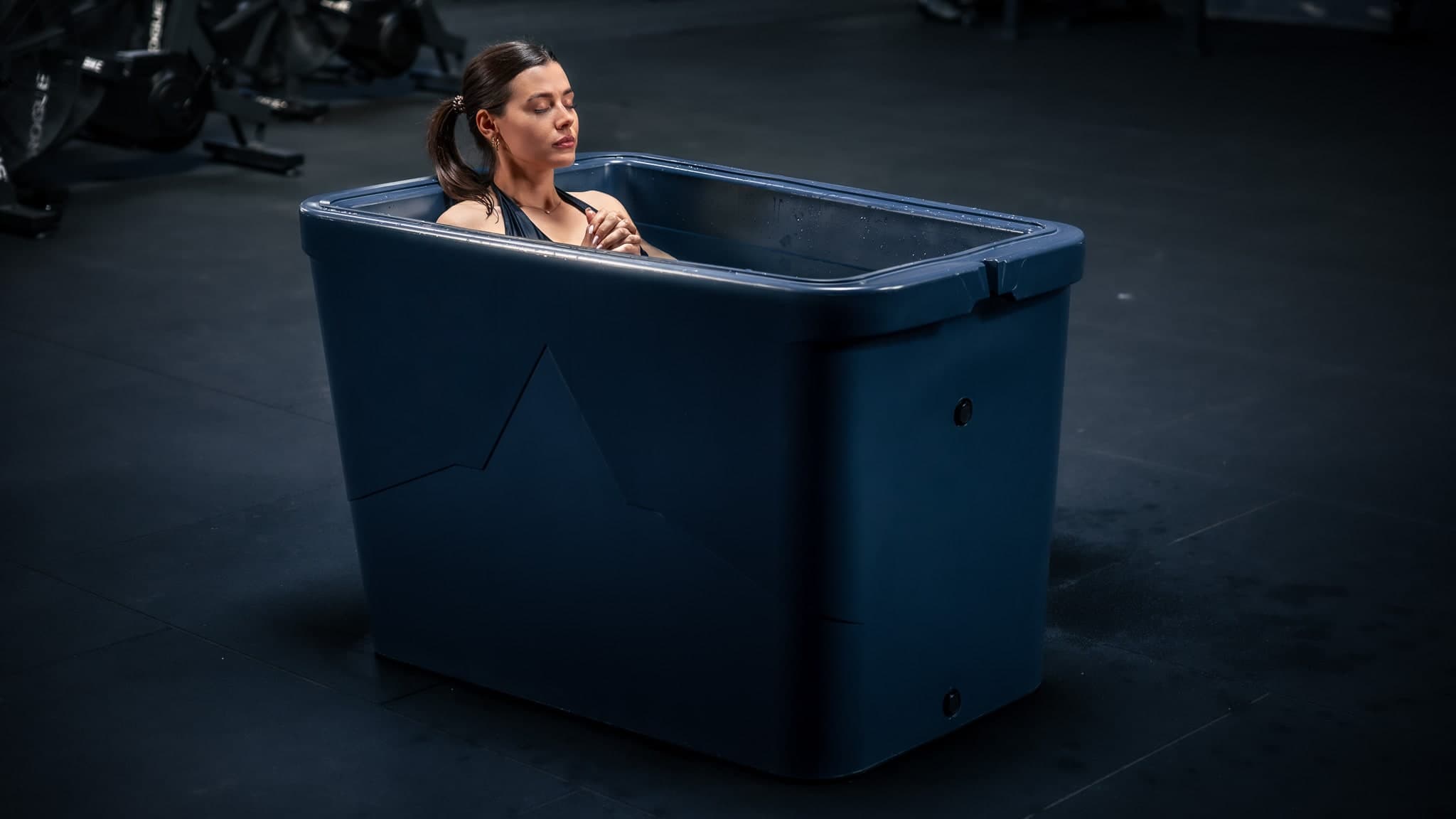
Cold plunging, also called an ice bath or cold water immersion, refers to deliberately immersing the body in cold water, typically between 8 and 15 degrees Celsius. Whether in an ice barrel, a simple ice tub, or a modern ice bath with a chiller, the principle stays the same: controlled cold exposure as part of a health routine.
Unlike whole-body cryotherapy chambers, which are often scientifically misunderstood and use freezing air, cold plunging uses water. The studies cited here refer exclusively to cold water immersion, because that is the method cold plunging is about.
The Documented Health Benefits of Cold Plunging
Better post-exercise recovery
The best-documented benefit. Cold water immersion reduces muscle soreness and the feeling of fatigue after intense exertion. For athletes who need to be ready to perform again quickly, this is a real tool. An important note on timing: immediately after strength training, cold can blunt muscle growth (Roberts et al., 2015), so some distance is worthwhile. More in our guide on cold plunging before or after a workout.
Deeper sleep
Chauvineau et al. (2021) showed that cold water immersion can deepen slow-wave sleep phases and reduce sleep arousals. Better sleep is one of the most valuable health effects of all, because it positively influences almost every other area of the body. More in our cold plunging and sleep guide.
Less stress and better mood
The large meta-analysis by Cain et al. (2025) in the journal PLOS ONE combined 11 randomised trials and confirmed that regular cold plunging reduces perceived stress and improves quality of life. Part of this comes from the neurotransmitters: at 14 degrees, norepinephrine rises by about 530 percent and dopamine by about 250 percent (Šrámek et al., 2000). These are directly linked to alertness, focus, and mood.
Immune system support
Buijze et al. (2016) studied 3,018 participants and found that regular cold showering was associated with 29 percent fewer sickness absence days. Important context: what was measured was absence days, not the number of illnesses themselves. Still a notable effect. More in our cold plunging and immune system guide.
Brown fat activation
Søberg et al. (2021) showed enhanced cold-induced thermogenesis in regular winter swimmers. Cold exposure activates brown adipose tissue, which burns energy to generate heat. This is the basis for the often-searched connection between cold plunging and fat burning. Honestly framed: cold plunging is no miracle weight-loss cure, but it can be part of a healthy metabolism. More in our cold plunging and weight loss guide.
How Cold and How Long? The Right Dose
Cold plunging becomes healthy through the right dose. More is not better here.
- Temperature: 10 to 15 degrees is ideal for most. Beginners start at 14 to 15 degrees, the experienced go lower. Extreme cold below 5 degrees brings no proportionally greater benefit.
- Duration: 2 to 5 minutes per session. Beginners start with 30 seconds to 2 minutes. Most benefits arise in the first few minutes.
- Frequency: 3 to 5 sessions per week is ideal, daily moderate practice is also healthy. Consistency over weeks matters more than intensity.
You can find more details in our temperature guide and in our beginners guide.
Is Cold Plunging Dangerous? Who It Isn't Suitable For
For healthy people, cold plunging is safe with moderate use. But there are situations where caution or medical clearance is important. Cold plunging is not ideal, or only suitable after consulting a doctor, in cases of:
- Cardiovascular disease, uncontrolled high blood pressure, or arrhythmias, since cold puts strain on the cardiovascular system
- Pregnancy, where you should get medical clearance first
- Epilepsy or certain neurological conditions
- Acute illness with fever
- Raynaud's syndrome or other cold sensitivities
An important safety rule for everyone: manage the initial cold shock reflex with calm, controlled breathing, and enter slowly. Never cold plunge alone in open water. More on a safe start in our beginners guide.
Can You Cold Plunge With a Cold?
A common question. The clear recommendation: with a mild cold without fever, moderate cold exposure can be fine, but listen to your body. With fever, strong fatigue, or a proper flu, you should pause. Your body needs its energy for recovery then, not for cold adaptation. If you feel weak, a break is the healthy choice.
Why the Right Equipment Makes the Difference
Whether cold plunging fits into your daily life in a healthy and sustainable way depends heavily on the equipment. Anyone who has to fill an ice tub by hand, haul bags of ice, and guess the temperature every time often gives up the routine after a few weeks. This is exactly where an ice bath with a chiller makes the difference.
A chiller keeps the water temperature constant and precise, without any ice. Cleaning is handled automatically by an ozone and filter system. This turns a demanding procedure into a simple daily habit, and only a habit you genuinely keep delivers the health benefits the science describes.
For cold plunging to truly benefit your health, consistency over weeks and months is what counts. The Theralpine Rhone ice bath with the Chiller Pro keeps the water temperature constant between 10 and 15 degrees, purifies the water chemical-free with ozone, and runs on any household socket. No ice, no preparation, simply ready every day. Designed in Switzerland, manufactured in the EU, built for routines that actually stick.
Frequently Asked Questions
Is cold plunging healthy?
Yes, for most healthy people cold plunging is safe and offers documented benefits for recovery, sleep, stress, and immune function. What matters is moderate temperatures (10 to 15 degrees), short sessions (2 to 5 minutes), and consistency over weeks. With cardiovascular conditions or during pregnancy, get medical clearance first.
What are the concrete benefits of cold plunging?
The best-documented benefits are faster post-exercise recovery, deeper sleep, less stress and better mood, immune system support, and brown fat activation. The effects build over weeks of regular practice.
How often should you cold plunge to make it healthy?
3 to 5 sessions per week is ideal. Daily moderate practice is also healthy. More important than the exact number is consistency over weeks and months.
Does cold plunging help with weight loss?
Cold plunging activates brown adipose tissue, which burns energy to generate heat. This can support metabolism but is no miracle weight-loss cure. As part of a healthy routine with exercise and nutrition, however, it can be helpful.
Is cold plunging dangerous?
For healthy people with moderate use, no. Caution is warranted with cardiovascular disease, high blood pressure, arrhythmias, pregnancy, epilepsy, and cold sensitivities. When in doubt, get medical clearance first, and always enter slowly with calm breathing.
Can you cold plunge with a cold?
With a mild cold without fever, it can be fine, but listen to your body. With fever or strong fatigue, better to pause so your body can use its energy for recovery.
The Bottom Line
Is cold plunging healthy? For most people, the answer is a clear yes. Science documents benefits for recovery, sleep, stress, mood, and immune function, provided you use moderate temperatures, short sessions, and stay consistent over weeks.
Whether you call it an ice bath, cold plunge, or cold water immersion: what matters is that it becomes part of your life. And that works best when the equipment takes the effort off your shoulders rather than adding to it.
The Theralpine Rhone Ice Bath with the Chiller Pro makes exactly this possible: constant temperature, chemical-free water care, ready every day. Designed in Switzerland, manufactured in the EU, built for your long-term health.
Ready to make cold plunging a healthy part of your daily life? Explore the Theralpine Rhone ice bath with Chiller Pro or Chiller Lite.
Studies & References
- Cain et al. (2025). Effects of Cold-Water Immersion on Health and Wellbeing: Systematic Review and Meta-Analysis. PLOS ONE.
- Buijze et al. (2016). The Effect of Cold Showering on Health and Work: A Randomized Controlled Trial. PLOS ONE.
- Šrámek et al. (2000). Human Physiological Responses to Immersion into Water of Different Temperatures. Eur J Appl Physiol.
- Chauvineau et al. (2021). Effect of the Depth of Cold Water Immersion on Sleep Architecture. Frontiers in Sports and Active Living.
- Søberg et al. (2021). Altered Brown Fat Thermoregulation and Enhanced Cold-Induced Thermogenesis. Cell Reports Medicine.
- Roberts et al. (2015). Post-exercise cold water immersion attenuates acute anabolic signalling and long-term adaptations in muscle. Journal of Physiology.
About the author
Lead Content & Recovery Research
Joana leads Theralpine's research and content team, translating cold-therapy science into practical guidance for athletes and everyday practitioners.
Read more

Science
Cold Plunge Benefits: What the Science Really Says (2026 Guide)
Athletes use it for recovery. Biohackers swear by the morning dopamine hit. And more and more people are discovering cold water immersion as a fixture of daily life. Here is what the science actually shows.

Science
Cold Plunging for Sleep: How Cold Therapy Actually Affects Your Sleep Quality
Sleep is the foundation of recovery, focus, mood, immune function, and longevity. Cold therapy has emerged as one of the more promising tools for improving it, but the science is more nuanced than the social media version suggests.
Science
Cold Plunge and Dopamine: What Cold Water Really Does for Focus and Mental Performance
Cold water immersion triggers one of the largest natural dopamine and noradrenaline responses ever measured outside of medication. Here is what the studies show, how long the effect lasts, and how to use it for your most focused hours.