

Science
Cold Plunge Benefits: What the Science Really Says (2026 Guide)
Athletes use it for recovery. Biohackers swear by the morning dopamine hit. And more and more people are discovering cold water immersion as a fixture of daily life. Here is what the science actually shows.

Joana Rusch
Lead Content & Recovery Research
You've probably seen it by now: athletes climbing into ice baths post-workout, wellness enthusiasts posting their morning plunges, biohackers raving about the dopamine rush. Cold water immersion (whether you call it a cold plunge, an ice bath, or cold water therapy) has gone from a niche recovery tool to a mainstream practice. And not just because it looks intense on social media.
This guide covers what the science actually supports across seven documented benefits, along with what the evidence shows about frequency, safety, and equipment.
1. Cold Plunge for Muscle Recovery: Why Athletes Started It
Cold water immersion's most established benefit is post-exercise muscle recovery. When you immerse in cold water, your blood vessels constrict (vasoconstriction), slowing inflammation and reducing swelling in worked muscles. Once you exit, vasodilation floods the muscles with freshly oxygenated blood.
A 2022 systematic review and meta-analysis in the Journal of Sports Sciences (Choo et al.) evaluated 68 studies and found that cold water immersion benefits the acute recovery of endurance performance and the longer-term recovery of muscle strength and power, coinciding with reductions in muscle damage markers.
The Cain et al. (2025) systematic review in PLOS ONE, covering 3,177 participants across 11 randomized controlled trials with water at or below 15°C, found significant reductions in stress levels after cold water immersion, along with time-dependent improvements in inflammation markers.
The picture is more nuanced for serious lifters, though. Our guide to cold plunging for athletes breaks down where immersion helps recovery and where it can interfere, and when to plunge around a workout covers the difference between training for endurance and training for muscle growth.
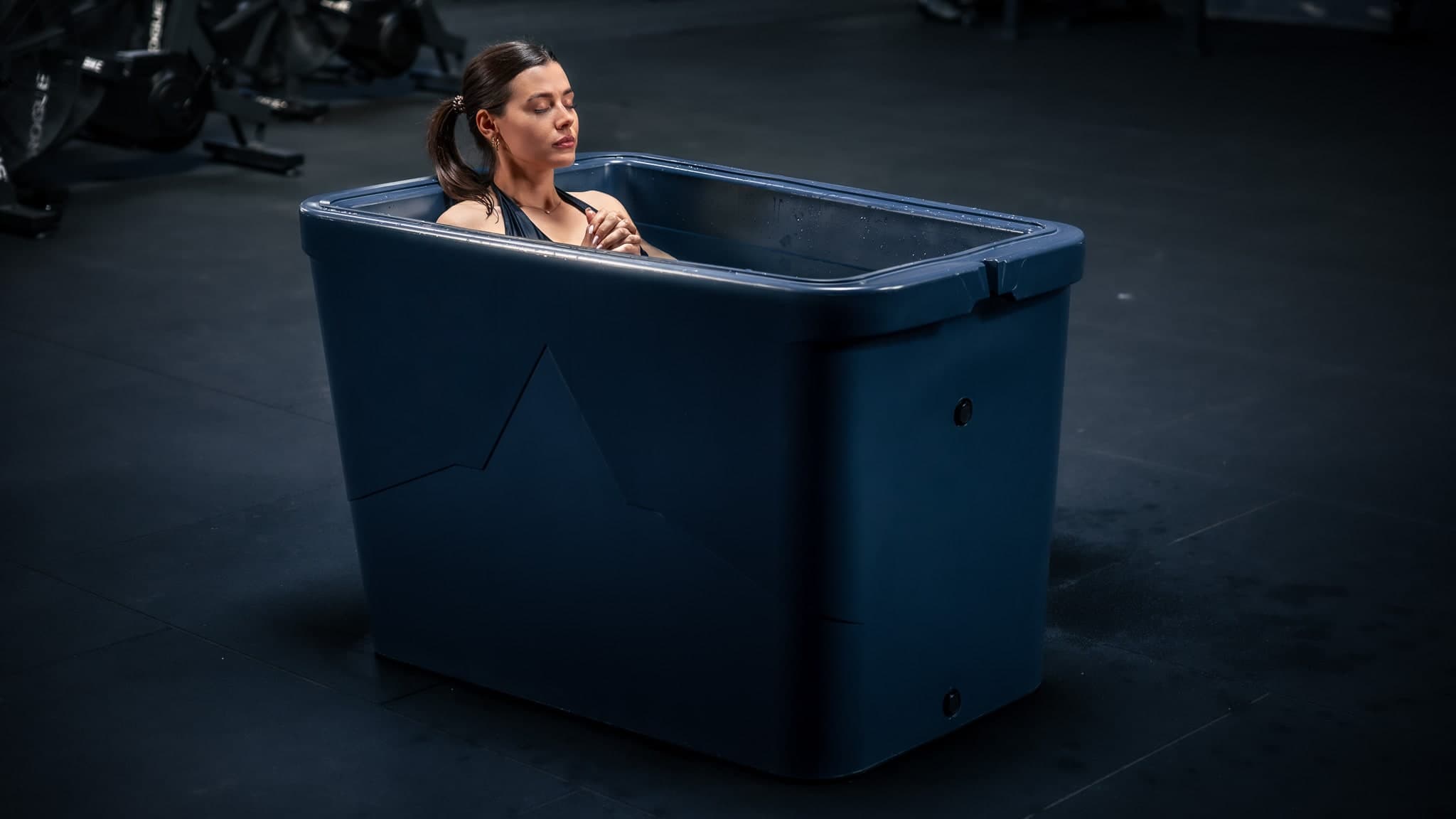
Cold water immersion is commonly used as part of the immediate post-exercise recovery window. The Theralpine Rhone ice bath is always ready. Its superior insulation keeps water cold for days, not hours.
2. Cold Plunge and Mood: The Dopamine Effect
One of the most compelling cold plunge benefits is its effect on brain chemicals linked to mood, focus, and motivation. Cold exposure triggers a powerful surge of norepinephrine and dopamine.
A landmark study by Šrámek et al. (2000, European Journal of Applied Physiology) measured the hormonal responses of healthy men during one-hour head-out immersion at different water temperatures. At 14°C, plasma norepinephrine increased by 530% and dopamine by 250% above baseline, helping explain the strong, alert, uplifted feeling many people report after cold exposure.
A hypothesis paper by Shevchuk (2008, Medical Hypotheses) proposed cold showers as a potential adjunctive treatment for depression, based on their stimulatory effect on the sympathetic nervous system and norepinephrine release. While not a clinical trial, the neurochemical rationale is consistent with the documented catecholamine surges from immersion studies.
3. Cold Plunge for Stress Resilience: Hormesis in Action
Hormesis is the principle that small, controlled doses of stress strengthen the body's adaptive systems. Cold exposure is a textbook example. Each plunge activates your sympathetic (fight-or-flight) system, then your parasympathetic ("rest and digest") nervous system kicks in to restore balance.
Research associated with Professor Mike Tipton's work at the University of Portsmouth (Experimental Physiology, 2017) shows that repeated cold-water exposure can blunt the cold shock response over time, meaning the body reacts less dramatically to the same cold stimulus. In practical terms: you train your nervous system to handle stress more calmly, both in and out of the water.
4. Ice Bath Benefits for the Immune System
Multiple studies have linked regular cold water exposure to immune modulation. A widely cited Dutch RCT (Buijze et al., PLOS ONE, 2016), involving 3,018 participants, found that people who ended their daily showers with 30–90 seconds of cold water reported 29% less sickness absence from work than the control group. The study measured days off work, not actual illness days, suggesting that cold exposure may boost energy and resilience as much as immune function directly.
In a separate line of research, Kox et al. (PNAS, 2014) found that a training programme combining cold exposure, breathing techniques, and meditation enabled participants to voluntarily influence parts of their stress and inflammatory response. When challenged with bacterial endotoxin, pro-inflammatory cytokines were reduced by approximately 50%, while anti-inflammatory mediators increased by around 200%. It's worth noting this was a combined intervention, not cold exposure alone.
A 2022 review in the International Journal of Circumpolar Health (Esperland et al.) suggested that regular cold-water exposure may have immune-related benefits, though the evidence is still mixed and varies across outcomes. More high-quality RCTs are needed. For a closer look at what the research does and does not support here, see our deep dive on cold plunging and the immune system.
5. Cold Plunge, Metabolism, and Brown Fat Activation
Cold exposure activates brown adipose tissue (BAT), a metabolically active type of fat that burns calories to generate heat through thermogenesis. A study in the New England Journal of Medicine (Virtanen et al., 2009) demonstrated that healthy adults have metabolically active brown adipose tissue that is activated by cold exposure.
Søberg et al. (2021, Cell Reports Medicine) studied young, healthy winter swimmers and found that regular cold water exposure led to altered brown fat thermoregulation and enhanced cold-induced thermogenesis, meaning the body became more efficient at generating heat and burning energy in response to cold. While dramatic calorie-burn claims circulating online are exaggerated, the more meaningful long-term effect is improved cold adaptation and metabolic efficiency through brown fat activation. We separate the realistic metabolic effects from the hype in our guide to cold plunging and weight loss.
6. Cold Plunge and Sleep Quality
Cold plunging can influence your circadian rhythm through its effect on core body temperature. A controlled study by Chauvineau et al. (2021, Frontiers in Sports and Active Living) used polysomnography (the gold standard for sleep measurement) to assess sleep architecture in endurance runners after cold water immersion at 13°C. Whole-body immersion produced significantly more slow-wave (deep) sleep during the first three hours of the night, reduced nighttime arousals, and decreased limb movements during sleep.
Because cold exposure affects core body temperature, timing may influence how it feels and how you sleep. Many people prefer it earlier in the day to reset their circadian rhythm, while others use it strategically around training. The Cain et al. (2025) meta-analysis also noted sleep quality improvements in individual included trials. Our full guide to cold plunging and sleep digs into timing and the trade-offs between morning and evening sessions.
Pair the Theralpine Rhone ice bath with the Chiller Pro for app-controlled temperature scheduling. Set your target the night before, and your ice tub is ready at exactly the right temperature when your alarm goes off.
7. Cold Plunge for Mental Resilience and Confidence
This benefit is harder to quantify but is consistently reported: deliberately entering cold water, staying calm, and controlling your breathing builds genuine mental toughness. Every session is a small act of self-discipline, and that discipline transfers to every other area of life.
Many regular cold plungers report improvements in focus, composure, and stress tolerance, though these outcomes are harder to quantify than physical recovery markers. The concept of "stress inoculation" (building resilience through repeated voluntary discomfort) is well-established in psychology, and cold exposure fits the model perfectly.
How Often Should You Cold Plunge?
The research points to consistency over intensity. Two to four sessions per week is sufficient for most people to experience cold plunge benefits related to mood, recovery, and resilience. Daily plunging is safe once you've adapted, but not necessary for measurable effects.
For most people, consistency matters more than extreme duration or temperature. A practical starting point is 2–4 sessions per week at a tolerable cold temperature (10–15°C / 50–59°F), with sessions of 2–5 minutes. A widely cited practical guideline suggests aiming for at least 11 minutes of total cold exposure per week, spread across multiple sessions. If you are just getting started, our beginner's guide to cold plunging walks through your first weeks step by step.
Important Safety Information
- If you train for strength or hypertrophy, avoid cold plunging immediately after resistance training. Evidence suggests it may blunt muscle protein synthesis (Roberts et al., Journal of Physiology, 2015). Wait at least 4–6 hours.
- Consult your doctor before starting if you have cardiovascular conditions, hypertension, diabetes, or Raynaud's disease.
- Exit immediately if you feel dizzy, experience chest pain, or lose fine motor control in fingers or toes.
What to Look for in a Cold Plunge for Home Use
For most people, the challenge is not learning the benefits. It's finding a cold plunge setup at home that makes consistency realistic. Our ice bath buyer's guide compares your options in full, but here's what matters most:
- Temperature stability: your water should stay at your target temperature between sessions, not warm up overnight.
- Insulation quality: the difference between refilling with ice every day and having cold water ready for days.
- Hygiene and filtration: clean water without constant draining and chemicals.
- Comfort and ergonomics: if the ice tub is uncomfortable to sit in, you won't use it consistently.
- Ease of daily use: the fewer steps between waking up and plunging, the more likely you'll do it.
The Theralpine Rhone ice bath is engineered around all five. With best-in-class insulation that keeps water cold for days, ergonomic design for comfortable sessions, and ozone filtration via the Chiller Pro that keeps water clean without chemicals. It's built to make daily cold therapy at home effortless.
Frequently Asked Questions About Cold Plunge Benefits
Are cold plunge benefits really backed by science?
Yes. Multiple systematic reviews and meta-analyses, including Cain et al. (2025) with 3,177 participants and Choo et al. (2022) with 68 studies, confirm measurable benefits for recovery, stress reduction, and sleep quality. The neurochemical effects (dopamine, norepinephrine) are well-documented in controlled studies.
How often should you cold plunge?
Two to four sessions per week at 10–15°C for 2–5 minutes is a solid starting point. Consistency matters far more than extreme cold or long durations.
What is the best cold plunge tub for home use?
Look for strong insulation, precise temperature control, and built-in filtration. The Theralpine Rhone ice bath with Chiller Pro offers all three, with app-controlled scheduling and ozone purification.
Is a cold plunge with chiller worth it?
A chiller eliminates the need to buy ice, removes temperature guesswork, and keeps water clean. For anyone planning to plunge more than a couple of times per week, a chiller pays for itself in consistency and convenience.
What temperature should an ice bath be?
The scientific consensus threshold is water at or below 15°C (59°F). Most research documents benefits at 10–15°C. See our full Cold Plunge Temperature Guide for details.
The Bottom Line
Cold plunge benefits are real, well-documented, and remarkably broad. From faster muscle recovery and a natural dopamine surge to resilience and deeper sleep, consistent cold water immersion delivers measurable results. But only with consistency.
Cold therapy works best when it becomes easy to do consistently at home. For anyone serious about making cold therapy a real habit, the Theralpine Rhone ice bath is designed to make daily plunging simpler, cleaner, and more consistent, with the Chiller Pro handling temperature and filtration automatically.
Ready to make cold therapy part of your routine? Explore the Theralpine Rhone ice bath and Chiller Pro!
Studies & References
- Buijze et al. (2016). The Effect of Cold Showering on Health and Work: A Randomized Controlled Trial. PLOS ONE.
- Cain et al. (2025). Effects of Cold-Water Immersion on Health and Wellbeing: Systematic Review and Meta-Analysis. PLOS ONE.
- Chauvineau et al. (2021). Effect of the Depth of Cold Water Immersion on Sleep Architecture. Frontiers in Sports and Active Living.
- Choo et al. (2022). Cold-water immersion and performance recovery. Journal of Sports Sciences.
- Esperland et al. (2022). Health effects of voluntary exposure to cold water. International Journal of Circumpolar Health.
- Kox et al. (2014). Voluntary activation of the sympathetic nervous system and attenuation of the innate immune response. PNAS.
- Roberts et al. (2015). Post-exercise cold water immersion attenuates acute anabolic signalling. Journal of Physiology.
- Shevchuk (2008). Adapted cold shower as a potential treatment for depression. Medical Hypotheses.
- Søberg et al. (2021). Altered Brown Fat Thermoregulation and Enhanced Cold-Induced Thermogenesis. Cell Reports Medicine.
- Šrámek et al. (2000). Human Physiological Responses to Immersion into Water of Different Temperatures. Eur J Appl Physiol.
- Tipton et al. (2017). Cold water immersion: kill or cure? Experimental Physiology.
- Virtanen et al. (2009). Functional Brown Adipose Tissue in Healthy Adults. New England Journal of Medicine.
About the author
Lead Content & Recovery Research
Joana leads Theralpine's research and content team, translating cold-therapy science into practical guidance for athletes and everyday practitioners.
Read more

Science
Cold Plunging for Sleep: How Cold Therapy Actually Affects Your Sleep Quality
Sleep is the foundation of recovery, focus, mood, immune function, and longevity. Cold therapy has emerged as one of the more promising tools for improving it, but the science is more nuanced than the social media version suggests.

Science
Is Cold Plunging Healthy? What the Science Really Says About Cold Water
Yes, cold plunging is safe for most healthy people and offers documented benefits for recovery, sleep, stress, mood, and immune function. The effects build over weeks of consistent practice, not from a single session.
Science
Cold Plunge and Dopamine: What Cold Water Really Does for Focus and Mental Performance
Cold water immersion triggers one of the largest natural dopamine and noradrenaline responses ever measured outside of medication. Here is what the studies show, how long the effect lasts, and how to use it for your most focused hours.