

Science
Ice Bath vs Cold Shower: Which Is More Effective?
Both involve cold water. Both feel uncomfortable. But are they actually the same thing? The science draws a clear distinction, and it matters for what you're trying to achieve.

Joana Rusch
Lead Content & Recovery Research
Both ice baths and cold showers involve cold water. Both feel uncomfortable. And both have vocal fans who swear by them. But are they actually the same thing? And if not, which one is better?
The short answer: they're not the same. An ice bath and a cold shower produce different levels of physiological response, and the science shows meaningful differences in how each one affects your nervous system, your recovery, and your mood. Here's what the research actually says.
The Core Difference: Full Immersion vs Partial Exposure
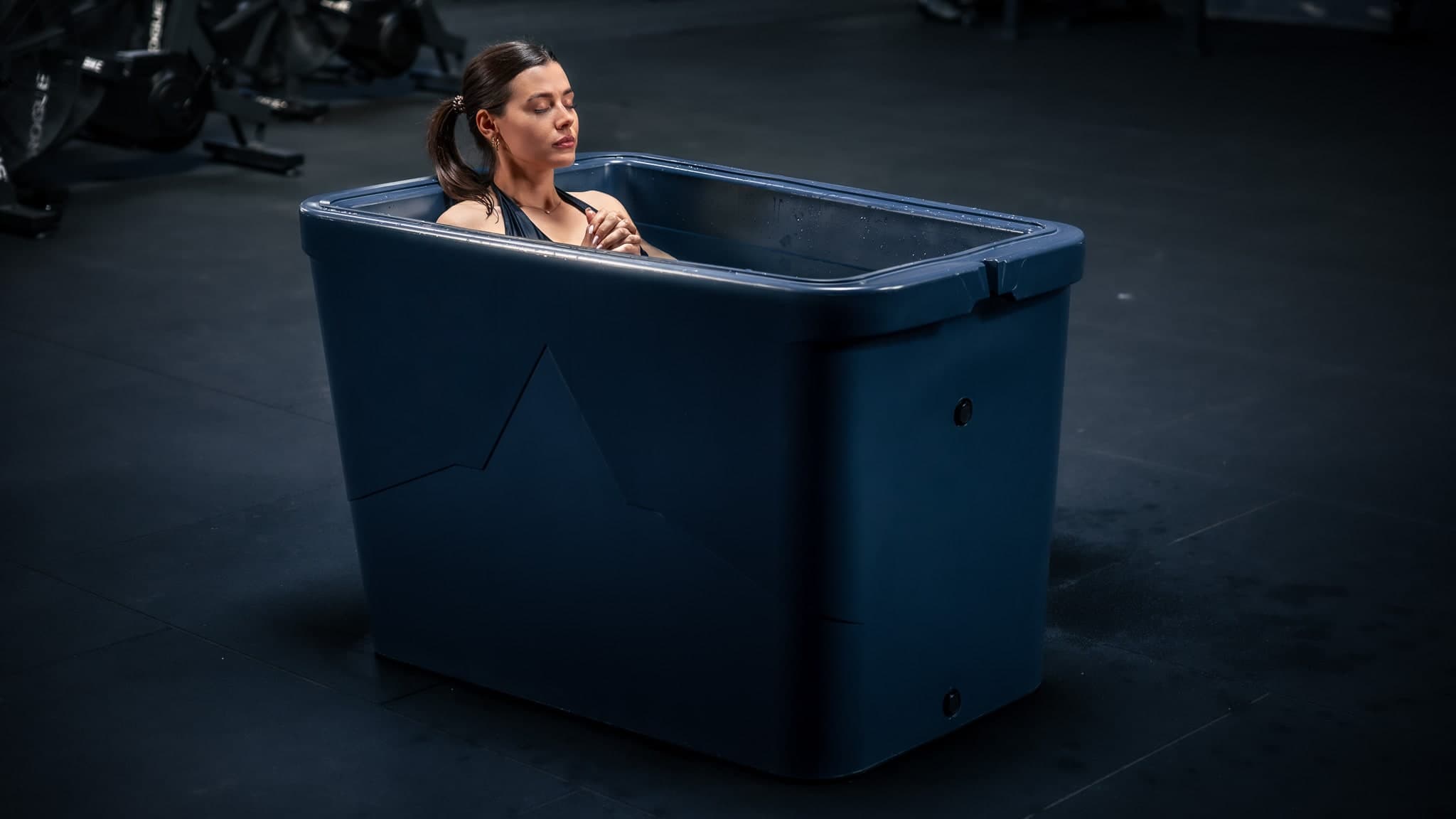
The fundamental distinction is simple. In a cold shower, water runs over parts of your body, but large areas remain exposed to air at room temperature. In an ice bath, also called an ice tub, your entire body (up to the neck) is submerged in uniformly cold water. This matters because the cold stimulus in an ice bath is both stronger and more consistent.
Your body's response to cold is proportional to how much surface area is exposed and at what temperature. Full immersion at 10 to 15°C produces a significantly stronger neurochemical and cardiovascular response than standing under a cold shower at a similar temperature, because the heat loss is far greater and affects the entire body simultaneously. If you're unsure where to set the water, our ice bath temperature guide breaks down the ranges and what each one does.
Neurochemistry: Dopamine and Norepinephrine
Šrámek et al. (2000, European Journal of Applied Physiology) measured the neurochemical response to full-body cold water immersion at 14°C and found a 530% increase in norepinephrine and a 250% increase in dopamine. These are among the most powerful natural neurochemical responses documented in scientific literature.
No study has shown cold showers producing comparable numbers. The reason is straightforward: a shower only cools a fraction of the body's surface area at any given moment, so the total cold stimulus is much smaller. Cold showers do produce some norepinephrine increase, and many people report feeling more alert afterwards, but the magnitude of the response is lower. For a fuller picture of what cold immersion does to the body, see the research behind cold plunge benefits.
If your primary goal is the neurochemical boost (mood, alertness, focus), full immersion delivers substantially more than a shower.
Recovery and Muscle Soreness
For athletic recovery, the evidence strongly favours full immersion. Choo et al. (2022, Journal of Sports Sciences) reviewed 68 studies and found that cold water immersion significantly reduced delayed-onset muscle soreness (DOMS) and accelerated perceived recovery. The mechanism involves vasoconstriction across the entire body, which reduces inflammation and metabolic waste in muscle tissue.
Cold showers cannot replicate this effect because they don't provide uniform cooling to the legs, hips, and lower back, the areas most affected by exercise-induced muscle damage. Partial cooling is better than nothing, but it's a fundamentally different stimulus. If recovery is your main reason for cold exposure, our guide on ice baths for athletes covers how to time immersion around training.
Stress Resilience and the Cold Shock Response
Both cold showers and ice baths trigger the cold shock response, the involuntary gasp, heart rate increase, and muscle tension that comes with sudden cold exposure. Research from Tipton et al. (Experimental Physiology, 2017) shows this response diminishes with repeated exposure, a process called habituation.
Here's where it gets interesting: habituation from cold showers appears to partially transfer to ice baths, but habituation from ice baths provides a stronger and more complete adaptation. In other words, if you start with cold showers and later move to ice baths, you'll find the transition easier. But someone who only takes cold showers will still experience a significant cold shock response when they first try full immersion.
For stress inoculation (training your nervous system to stay calm under pressure), ice baths provide a more intense and effective stimulus.
Vagus Nerve Activation
The vagus nerve runs along the neck and responds powerfully to cold stimulation. Full immersion, which submerges the neck, shoulders, and chest, provides a much more comprehensive vagal stimulus than water running over the top of your head and shoulders in a shower.
Jungmann et al. (2018, JMIR Formative Research) showed that cold stimulation of the neck region produced measurable cardiac-vagal activation. In an ice bath, the entire neck and torso are continuously cooled, which amplifies this effect significantly compared to the intermittent contact of a shower stream.
Practical Comparison
| Ice bath | Cold shower | |
|---|---|---|
| Cost & access | Equipment investment | Free, immediately available |
| Neurochemical response (dopamine, norepinephrine) | Much stronger | Milder |
| Body coverage | Full-body immersion, uniform cooling | Partial exposure |
| Vagus nerve stimulation | Greater | Less |
| Athletic recovery & inflammation | More effective | Limited |
| Temperature control | Precise (with a chiller) | None |
| Typical session | 2–5 min | 1–3 min |
| Best as | The full benefit and recovery tool | An entry point and daily maintenance |
Cold Shower Advantages
- Free and immediately available.
- No equipment needed.
- Easy to incorporate into an existing daily routine.
- Good starting point for building cold tolerance.
- Takes only 1 to 3 minutes.
Ice Bath Advantages
- Much stronger neurochemical response (dopamine, norepinephrine).
- Full-body immersion for uniform cooling and recovery.
- Greater vagus nerve stimulation.
- More effective for athletic recovery and inflammation.
- Stronger stress inoculation effect.
- Precise temperature control (with a chiller).
So Which Should You Choose?
This isn't really an either/or question. Cold showers and ice baths serve different purposes, and many people use both.
Start with cold showers if you're completely new to cold exposure. End your regular showers with 30 to 60 seconds of cold water for a week or two. This builds basic cold tolerance and teaches you to control your breathing under discomfort. Our beginner's guide to cold plunging walks through the first few weeks step by step.
Move to ice baths when you want the full neurochemical and recovery benefits. The transition is much easier if you've already built some tolerance through cold showers.
Use cold showers as a daily maintenance tool on days when you don't have time for a full session in the ice tub. They're not a substitute for immersion, but they keep the habit alive.
The Theralpine Rhone ice bath with Chiller Pro makes the transition from cold showers to ice baths effortless. Set your target temperature via the app, and the water is ready whenever you are. No ice, no guesswork, no barrier between you and a consistent immersion practice.
Frequently Asked Questions
Is a cold shower a good substitute for an ice bath?
For basic alertness and cold tolerance, yes. For recovery, mood enhancement, and stress resilience, an ice bath is significantly more effective due to full-body immersion and the stronger neurochemical response.
Can cold showers produce the same dopamine increase as ice baths?
Not to the same degree. The Šrámek study measured 250% dopamine increase during full immersion at 14°C. No comparable data exists for cold showers, and the partial body exposure means the stimulus is inherently weaker.
Should I do cold showers before trying an ice bath?
It's a good idea. A week or two of ending your showers with cold water builds baseline tolerance and makes the transition to full immersion much smoother.
How cold does a shower need to be to get benefits?
Most household cold water runs at 10 to 15°C, which is cold enough to trigger some norepinephrine release and alertness. The colder the better within a comfortable range, but even moderately cold water provides some benefit.
The Bottom Line
Cold showers are free, easy, and better than nothing. Ice baths are more effective for recovery, neurochemistry, and stress resilience. If you're serious about cold therapy, cold showers are where you start. An ice bath is where you graduate to.
The Theralpine Rhone ice bath with Chiller Pro makes that graduation as simple as possible. Swiss-engineered, EU-manufactured, and ready to use year-round.
Ready to upgrade from cold showers? Explore the Theralpine Rhone ice bath and Chiller Pro or our new Chiller Lite.
References
- Šrámek et al. (2000). Human Physiological Responses to Immersion into Water of Different Temperatures. Eur J Appl Physiol.
- Choo et al. (2022). Cold Water Immersion for Recovery. Journal of Sports Sciences.
- Tipton et al. (2017). Cold Water Immersion: Kill or Cure? Experimental Physiology.
- Jungmann et al. (2018). Effects of Cold Stimulation on Cardiac-Vagal Activation. JMIR Formative Research.
- Shevchuk (2008). Adapted Cold Shower as a Potential Treatment for Depression. Medical Hypotheses.
About the author
Lead Content & Recovery Research
Joana leads Theralpine's research and content team, translating cold-therapy science into practical guidance for athletes and everyday practitioners.
Read more

Science
Wim Hof Method or Regular Cold Plunging: Which One Fits You, and What Does the Science Say?
Wim Hof Method or regular cold plunging? An honest, science-backed comparison: what the research shows, what each offers, and which one fits which type of person.
Science
Cold Plunge and Dopamine: What Cold Water Really Does for Focus and Mental Performance
Cold water immersion triggers one of the largest natural dopamine and noradrenaline responses ever measured outside of medication. Here is what the studies show, how long the effect lasts, and how to use it for your most focused hours.

Science
Cold Plunge Benefits: What the Science Really Says (2026 Guide)
Athletes use it for recovery. Biohackers swear by the morning dopamine hit. And more and more people are discovering cold water immersion as a fixture of daily life. Here is what the science actually shows.